Construction Tech Coming in 2027: What's Real, What's Rumored
Robotics, AI-drafted estimating, exoskeletons, and on-site 3D printing are moving from demos to jobsites. Here is what small contractors should watch, and what is still hype.
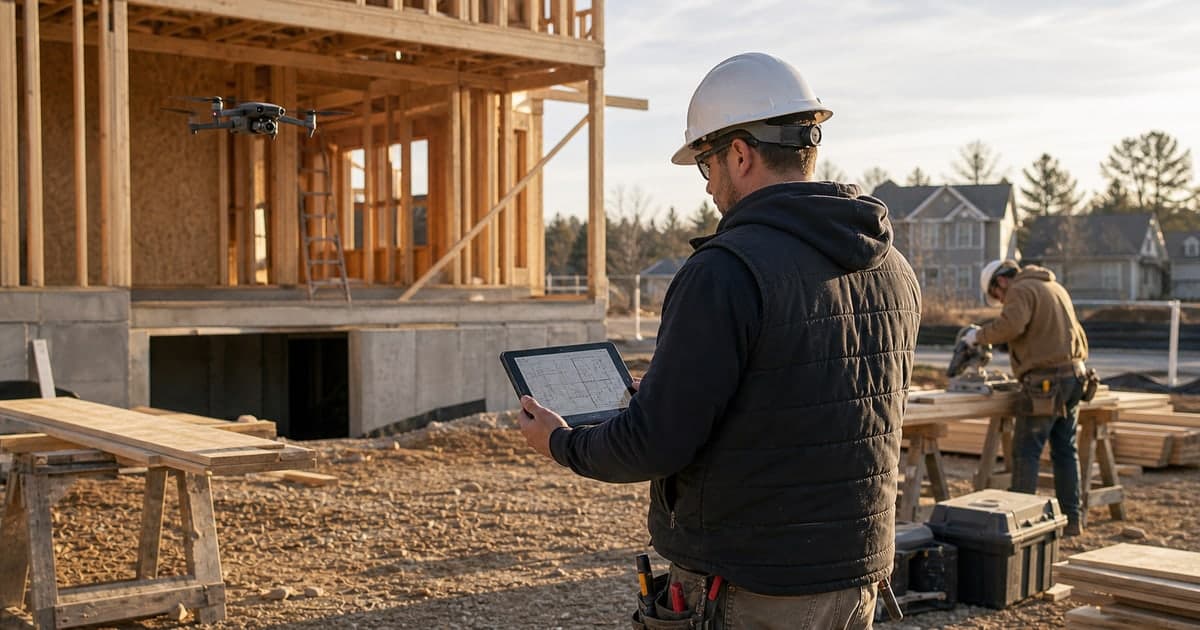
What construction technology is coming in 2027?
The construction tech moving toward mainstream jobsites in 2027 falls into four buckets: AI-drafted estimating, jobsite robotics for repetitive tasks, wearables and exoskeletons for safety, and on-site additive construction (3D printing). Some of this is already shipping to large contractors. The honest answer for a small GC or sub is that a few of these will quietly change your bidding within a year, while others remain expensive demos for another decade. The goal of this article is to separate the tools worth tracking from the ones worth ignoring, judged by one question: does it reduce a cost a small contractor actually carries today?
Real and arriving: AI-drafted estimating
This is the nearest-term shift, and it is already real. AI-drafted estimating reviews plan files and suggests scope lines and pricing inputs that a person would otherwise assemble by hand. For a small contractor, the value is not a robot; it is getting hours back per bid and catching scope you would have missed at midnight. What is still rumored here is full autonomy. AI does not produce a final, contract-ready estimate without a human checking scope and pricing. Treat AI-drafted estimating as a fast first draft that a knowledgeable estimator confirms, not a replacement for judgment.
Real but big-budget: jobsite robotics and 3D printing
Layout robots, bricklaying machines, rebar-tying robots, and demolition units exist and work. So does on-site 3D printing of concrete walls. The catch is capital. These are bought by large contractors and specialized firms with the volume to justify the cost. For a small crew in 2027, you will more likely encounter them as a subcontracted service than as something you own. Worth watching, not worth buying yet, unless your niche is high enough volume to amortize a six-figure machine.
Rumored and overhyped: full-site automation
The recurring headline is the fully autonomous jobsite where robots build with no crew. That is not arriving in 2027, and arguably not this decade for general construction. Sites are too variable, too unstructured, and too dependent on trade judgment. Be skeptical of any vendor selling end-to-end autonomy to a small contractor. Exoskeletons and safety wearables are in between: real, dropping in price, and genuinely useful for reducing strain injuries, but adoption is still early and ROI depends on your trade.
What a small contractor should actually do
Adopt the tech that pays back this year, and watch the rest. The clear near-term win is software that compresses bidding and back-office work: AI-drafted estimating, fast estimating, automatic markup, and estimate-to-invoice flow. That is available now, priced for small operators, and does not require buying a robot. BuilderMaxPro focuses on exactly this layer. It brings AI-Drafted Estimates, invoicing, and lien-deadline tracking into one browser-based and mobile platform built for small GCs and subs. You can try it at buildermaxpro.com while you keep an eye on the heavier machinery from a safe distance.
Frequently asked questions
What new construction technology is coming in 2027?
The main areas are AI-drafted estimating, jobsite robotics for repetitive tasks, safety wearables and exoskeletons, and on-site 3D printing of concrete. AI-drafted estimating is the nearest-term and most affordable for small contractors; robotics and 3D printing remain big-budget.
Is AI-drafted estimating accurate enough to replace an estimator?
Not yet. AI-drafted estimating produces a fast first draft of scope and pricing inputs, but a knowledgeable person should still confirm quantities, scope, and pricing before the estimate goes out. Treat it as time saved, not a full replacement for judgment.
Will robots replace construction crews soon?
No. Fully autonomous jobsites are not arriving in 2027. Construction sites are too variable and trade-dependent. Robotics today handle narrow, repetitive tasks and are mostly owned by large or specialized firms.