5 Construction Technology Trends Reshaping the Jobsite
The jobsite is becoming more instrumented, more connected, and more data-driven. These five trends are moving from early adopters into the contractor mainstream.
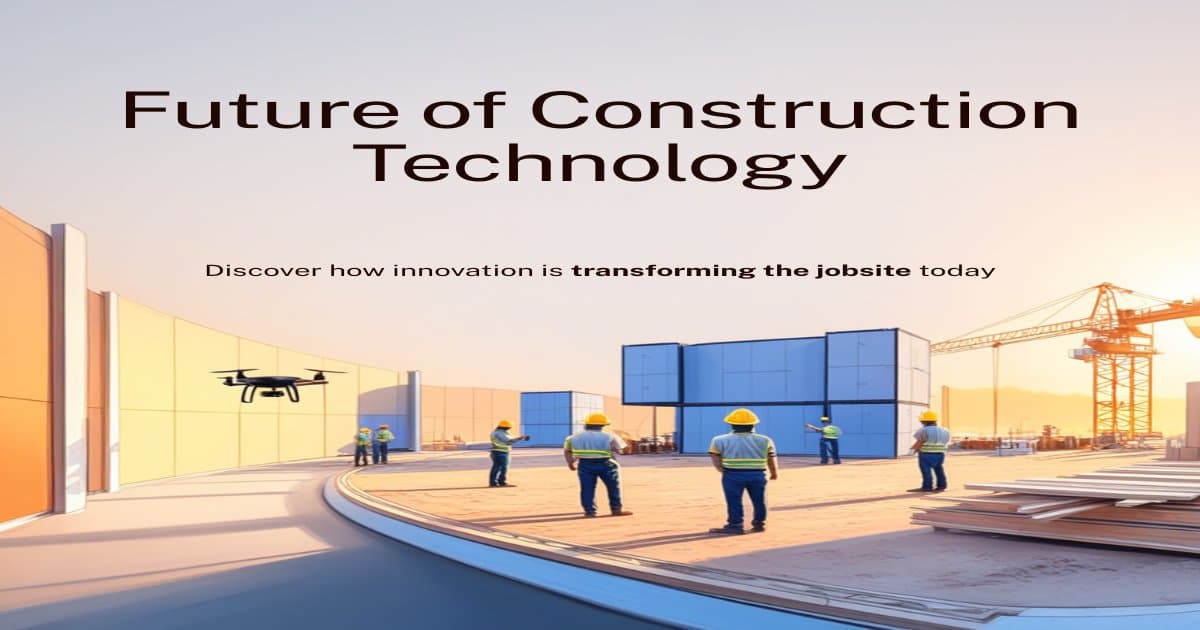
Drones and aerial surveying
Drones are no longer just marketing footage. Contractors use aerial capture to document site conditions, verify progress, inspect roofs, measure stockpiles, and reduce dispute risk. For earthwork and exterior trades, the value is speed and evidence. A fifteen-minute flight can produce a site record that is more useful than a dozen text updates. The best operators tie drone data to project controls. Photos and maps should support pay applications, schedule updates, safety reviews, and owner communication. The technology pays off when it becomes part of the record, not when it sits in a folder nobody opens.
Wearable safety technology
Wearables are moving beyond step counters. On complex sites, sensors can help monitor heat exposure, fall events, proximity to equipment, and fatigue patterns. Contractors facing tighter labor markets cannot afford preventable injuries or avoidable downtime. Safety technology is not a replacement for supervision, but it gives supervisors earlier signals. Adoption depends on trust. Crews need to understand what is being measured and why. The strongest programs focus on hazard prevention, not worker surveillance. If wearable data is used to redesign traffic flow, schedule high-heat work earlier, or improve training, crews are more likely to accept it.
Modular and prefab construction
Prefab is expanding because the jobsite is often the hardest place to control quality, labor productivity, and weather risk. Moving repeatable assemblies into a shop can shorten schedules and make costs more predictable. Mechanical racks, bathroom pods, wall panels, and modular rooms are increasingly common on projects where repeatability is high. The tradeoff is planning discipline. Prefab rewards early coordination and punishes late design changes. Contractors need tighter submittal timing, clearer tolerances, and better logistics. When those pieces are in place, prefab can reduce field congestion and shift labor from chaotic site work to controlled production.
Digital twins and BIM
BIM has long helped design teams coordinate geometry. Digital twins push the model into the operating life of the building. For contractors, the near-term value is clash prevention, sequencing, and handoff quality. A model tied to schedule, cost, and field updates can expose conflicts before they become rework. Small and midsize contractors do not need to model everything. They should focus on high-conflict scopes: mechanical rooms, structural penetrations, envelope transitions, and areas with dense trade overlap. The goal is not a beautiful model. The goal is fewer surprises in the field.
Sustainable building technology
Sustainability is becoming a construction operations issue, not only a design value. Contractors are being asked to track low-carbon materials, waste diversion, energy performance, and compliance documentation. New materials and electrified equipment can reduce environmental impact, but they also add procurement and training complexity. The contractors who handle this well will treat sustainability like any other controlled scope. They will document substitutions, verify product data, track installation requirements, and price the coordination time. Green building technology creates opportunity, but only when the field workflow is specific enough to deliver what was promised.